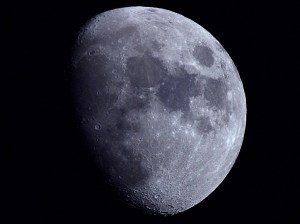
 For centuries the moon has dominated man’s imagination. The moon plays a predominant part in man’s religious and social culture. However, the moon is a purely physical entity and tells man more about the Earth, the Solar System and how it is all related than any myth about the moon and its effect on us ever did. Man’s ability to travel to the Moon in 1969 dispelled many theories and led to the creation of many more. When being a planet with an atmosphere, size matters.
We know more about the Moon than for any other solar system object except Earth. On July 20, 1969, American Astronauts became the first men to walk on the surface of the Moon. The moon’s gravity is one-sixth that of the Earth’s; a man who weighs 180 lbs on Earth weighs only 30 lbs on the Moon. The Moon is 384,403 kilometers (238,857 miles) distant from the Earth. Its diameter is 3,476 kilometers (2,160 miles). The rotation of the Moon and its revolution around Earth takes 27 days, 7 hours, and 43 minutes. This synchronous rotation is caused by an unsymmetrical distribution of mass in the Moon, which has allowed Earth’s gravity to keep one lunar hemisphere permanently turned toward Earth. The Apollo Astronauts planted four nuclear powered seismic stations to collect seismic data about the interior of the Moon. What they have found is that the Moon has a crust 60 kilometers (37 miles) thick at the center of the near side. If the Moon’s crust is uniform, it would constitute about 10% of the Moon’s volume as compared to the less than 1% on Earth.
The moon doesn’t have an atmosphere. It’s just too small to contain one. Without an atmosphere the moon has been left unprotected since its birth to the ravages of outer space. Meteorites impacting on the surface of the Moon brought a variety of rocks, so that samples obtained from the 9 landing locations produced many different rock types for study. The impacts also exposed Moon rocks of great depth and distributed their fragments laterally away from their places of origin, making them more accessible. Geological activity on the Moon consists of occasional large impacts and the continued formation of the regolith. Micrometeorite bombardment has thoroughly pulverized the surface rocks into fine-grained debris called the regolith. The regolith, or lunar soil, is unconsolidated mineral grains, rock fragments, and combinations of these which have been welded by impact-generated glass. The earth on the other hand was healed its scares. Having an atmosphere, the earth has weather and weather washes away (erodes) most of the telltale signs of this planet’s early bombardment.
The dark, relatively lightly cratered maria cover about 16% of the lunar surface and is concentrated on the nearside of the Moon, mostly within impact basins. The relatively bright, heavily cratered highlands are called terrae. The dominant rock type in this region contain high contents of plagioclase feldspar (a mineral rich in calcium and aluminum) and are a mixture of crust fragments molded and fused by meteorite impacts. Most terrae breccias are composed of still older breccia fragments. Other terrae samples are fine-grained crystalline rocks formed by shock melting due to the high pressures of an impact event. The density of the moon is about 3/5ths the density of the Earth. Current scientific hypothesis about the creation of the Moon leans toward an object from within the Solar System shearing off a piece of the Earth’s crust and do with the help of the Earth’s gravitational pull and the mass of the debris formed our Moon. A satellite object without an iron core and just the mantel; this is our Moon.
The Moon is our little brother who was formed roughly around the same time as the Earth and the Solar system. The Moon never had the size and mass that its big brother had and therefore could never develop the atmosphere that gave birth to the life on the Earth. Not being able to have the protection of an atmosphere the Moon shows us, what could have been.
Some Great Links:
http://stardate.org/nightsky/moon/
http://www.msnucleus.org/membership/html/k-6/uc/earth/2/uce2_3a.html
http://www.synapses.co.uk/astro/moon3.html
http://www.enchantedlearning.com/report/planet/
http://www.enchantedlearning.com/graphicorganizers/astrorpt/planetrpt.shtml
http://www.windows.ucar.edu/tour/link=/earth/moons_and_rings.html&edu=elem
http://www.solarviews.com/eng/moon.htm
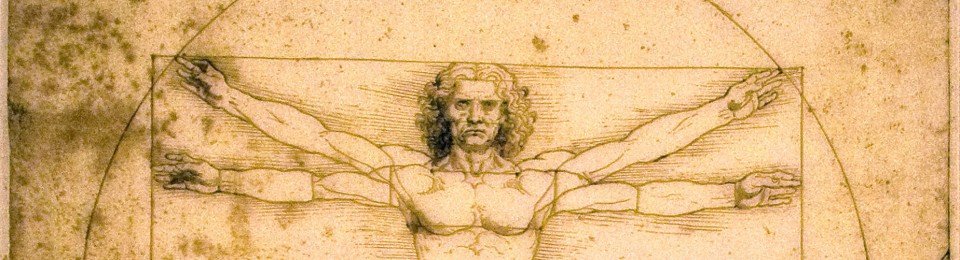
 While superstition deals with the petty beliefs of day to day living, religion tends to answer the big questions of life and death. A religion is revealed knowledge handed to man from above. Whereas science is the discovery through gathering of facts, and although science also looks to answer the same questions about death and life, science tends to look at how, and not why. In religion, the questions and answers of life are, why are we here? What happens to us when we die?, and is there an ultimate goal? Are we all that we are? Science deals with facts, religion requires the faith. Unfortunately, ancient man’s belief that certain gods were responsible for good crops and abundance of food, it was science and observation that provides the answer in looking for the right soil, the right time of the year to plant and the right seeds. Religion dealt with questions that ranged from how to treat your neighbor to where do we go when we die.


 Robert Barbere